
Checking Criminal History in Grass Lake
Begin with the most local proof of the event: a citation, report receipt, dispatch number, court notice, or agency name. A Grass Lake street address does not by itself show who keeps the police report. The village’s official materials did not verify a municipal police records portal. A sheriff, township service, or Michigan State Police response must be requested from that responding agency rather than from a village property or document system.
- Collect the Grass Lake location, date, time range, legal name, incident number, and the record type needed.
- Ask the village clerk to identify the holder if no citation or report names the responding agency.
- Request the incident or arrest file from the sheriff, MSP, or other agency that created it.
- Contact Jackson County Corrections for booking information, then search 12th District Court for the filed case.
- Check 4th Circuit after felony bindover and use ICHAT only for its limited public Michigan history.
This layered search prevents false conclusions. An empty Grass Lake village search does not speak for a county jail, a district docket, a circuit file, or Michigan’s repository.
Grass Lake’s Noon Records Closure
The Grass Lake village office is at 119 N. Lake Street, P.O. Box 737, Grass Lake, MI 49240. Its published counter hours are Monday through Thursday, 9 a.m. to noon and 1 to 4 p.m. The noon break and Friday closure are real local limits. A walk-in visitor who arrives at noon or on Friday should not expect the normal clerk counter to be open.
The official Grass Lake government site publishes the village contacts and hours.
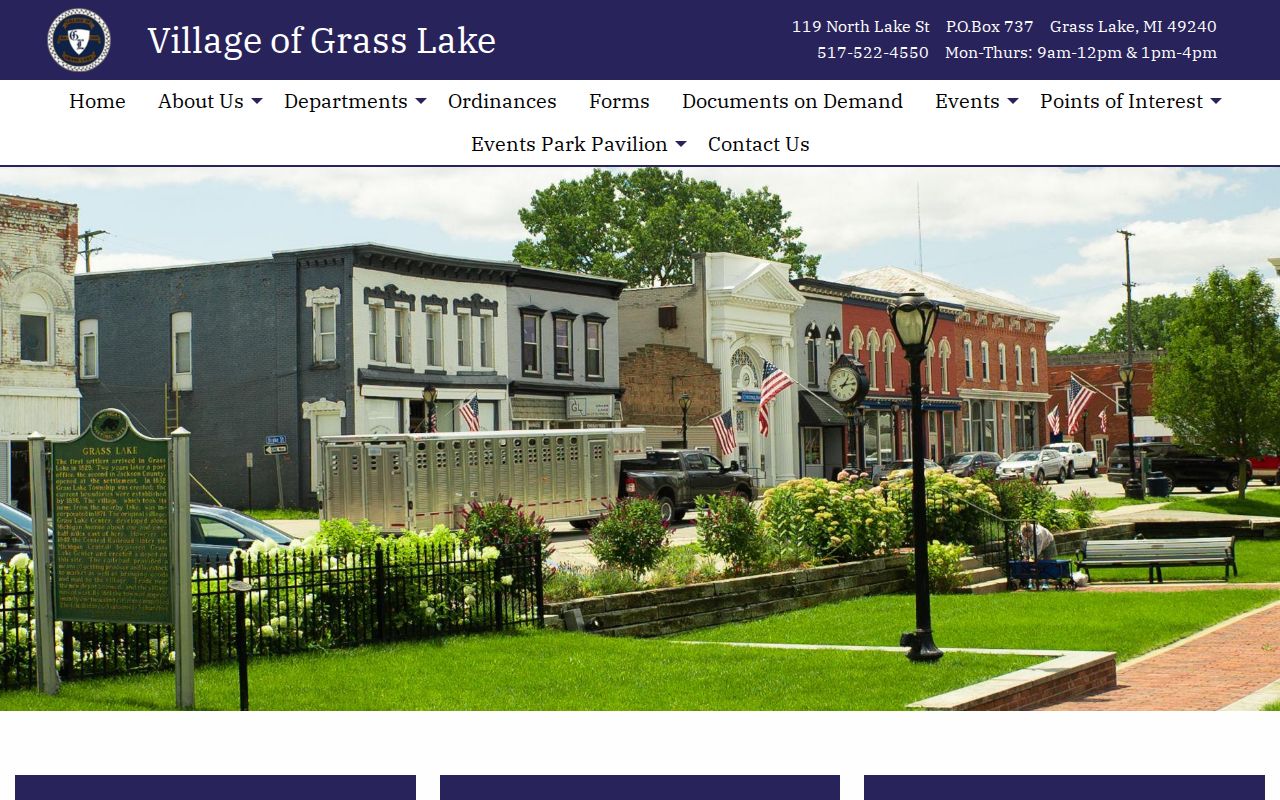
The official page is the source for village government access, but law-enforcement reports still belong to the agency that made them.
Call 517-522-4550 before making a records trip when the goal is holder identification or a village document. Give the clerk the date, location, and type of record. Ask whether Grass Lake possesses a responsive administrative file and, if not, which public-safety agency likely responded. The clerk should not be asked to run a broad criminal background search.
Grass Lake Police Department Records
No current Grass Lake municipal police portal, police records unit, official police app, or village arrest log was verified on the village site. Readers should not infer a department or database from the place name. Inspect a citation, receipt, court entry, or agency report number for the enforcing office. The likely official route may be Jackson County Sheriff, Michigan State Police, or another serving law-enforcement agency, depending on who answered the incident.
Send the request to the creator. For a sheriff response, use the Jackson County FOIA channel. For an MSP response, use MSP’s public-record process. Name the Grass Lake location, incident date and time, subject or event, report number if known, and the exact product, such as an incident narrative, arrest report, dispatch record, or releasable media. Ask for electronic delivery and the release of reasonably segregable nonexempt parts.
Records involving active investigations, juveniles, victims, medical details, protected identifiers, or safety information may be redacted or withheld. A partial response can still confirm the agency and provide usable public facts.
Grass Lake Clerk Finds the Holder
The village clerk is a routing point when the record trail is unclear. That role is narrow but useful. Bring enough facts to distinguish a police incident from a village administrative matter. A government-document request about a council action, village correspondence, or ordinance can belong with Grass Lake. A request for an arrest narrative, booking record, or court judgment belongs elsewhere.
A good holder-identification question is short: “Which agency responded at this Grass Lake location on this date?” If staff can identify the agency, write down its full name. Then confirm the official records channel on that agency’s government page. If village staff finds no responsive record, ask whether the request should go to the sheriff or MSP. Do not treat the answer as proof no event occurred.
This routing method works for older Grass Lake matters too. An old citation may use an abbreviated agency name or court number. The 12th District Court register can provide the case number, enforcing agency, and filed charge needed to make a much tighter report request.
Grass Lake Arrests and Bookings
Grass Lake does not operate a verified village jail or public booking search. After a local arrest, Jackson County Corrections is the official channel for present custody and county intake information. No dependable public inmate-name roster was found on the county site, so use the Corrections page, sheriff phone, lobby, or a focused FOIA request. Immediately after an arrest, the person may still be in transport or processing and no public district case may yet appear.
A Grass Lake booking request can ask for the booking face sheet, arresting-agency name, intake time, holding charge, bond or hold list, court number, release status, and other releasable fields. The jail record does not settle guilt. Police arrest charges can differ from the prosecutor’s authorized complaint, and the court can amend or dismiss a charge.
After arraignment, compare the booking data with the 12th District case. If a felony proceeds, search the 4th Circuit record after bindover. That sequence is more reliable than ICHAT for a recent Grass Lake arrest because ICHAT is not a real-time log.
Grass Lake Property Portals Are Not Cases
The village’s BS&A portal concerns taxes, utilities, permits, and invoices. It is not a Grass Lake criminal case database. A name or address found in a property system does not establish a police contact, arrest, charge, or conviction. The reverse is also true: an empty property search says nothing about law-enforcement or court records.
Use the record’s purpose to select the system. Village payment and parcel facts stay in the village portal. Police narratives remain with the enforcing agency. County booking records remain with Corrections. The 12th District Court shows misdemeanors and preliminary felony events, while 4th Circuit shows a felony after bindover. ICHAT adds a separate state repository view for reportable public Michigan history.
This distinction is especially important for an address-based inquiry. A Grass Lake address can be a useful event locator in a narrow FOIA request, but official criminal records are indexed by agency identifiers, court case numbers, and verified names. Do not carry assumptions from a tax or utility screen into a criminal-record conclusion.
Municipal Court Records in Grass Lake
Grass Lake has no verified village criminal court. Criminal ordinance matters, misdemeanors, and the first stages of felony cases route to the countywide 12th Judicial District Court at 312 S. Jackson Street in Jackson. A felony that is bound over moves to the 4th Judicial Circuit Court at the same address. The two court levels serve different parts of one case path.
| Court Name | 12th Judicial District Court; 4th Judicial Circuit Court after felony bindover |
|---|---|
| Case Types Heard | District handles misdemeanors and preliminary felony stages; circuit handles felony trial and disposition |
| Case Lookup Channel | Jackson Courts Docket or MiCOURT participating-court search, followed by the correct clerk |
| What the Docket Shows | Case number, filing date, charge, statute, hearings, register entries, status, and public disposition |
| Copies & Fees | The clerk supplies available documents and certified dispositions under current copy and certification terms |
The Jackson Courts Docket gateway routes Grass Lake searches to the appropriate county court.
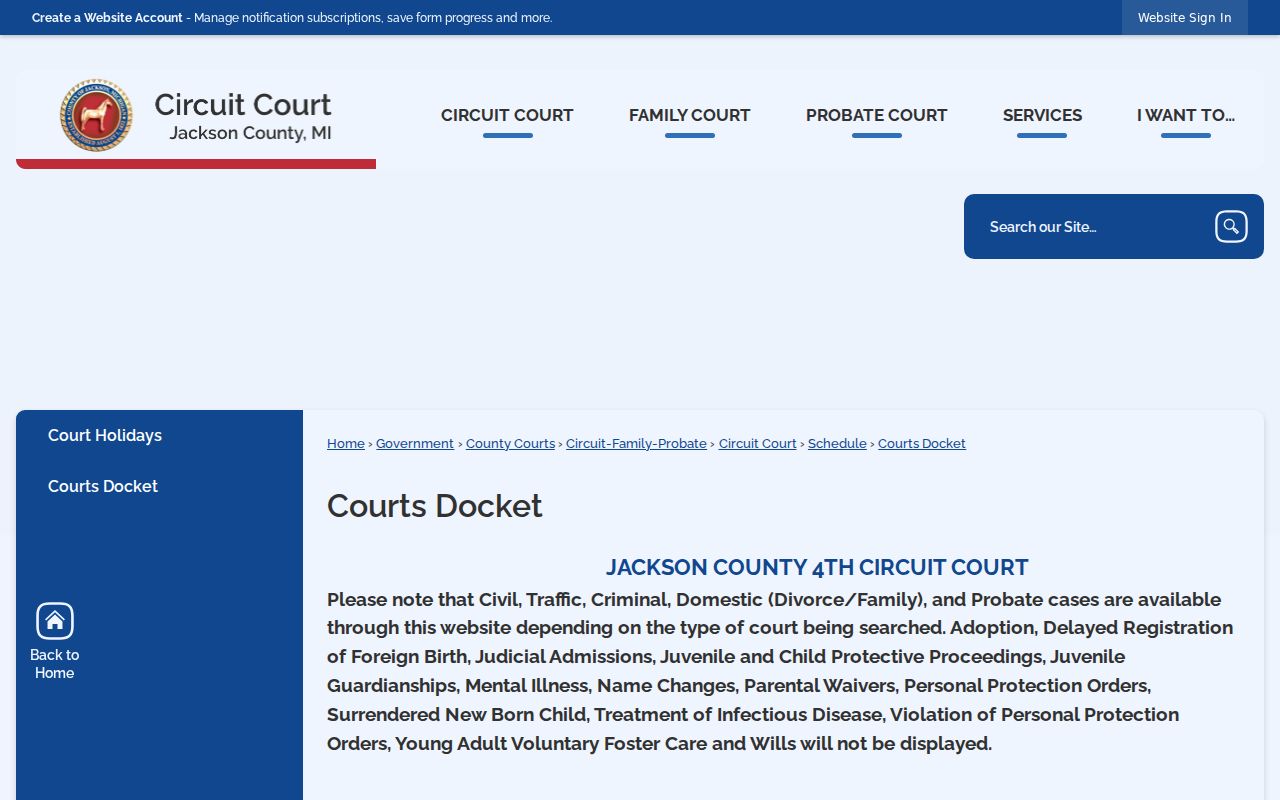
The gateway confirms that village cases are searched through county court systems rather than a Grass Lake municipal docket.
Start in 12th District for a Grass Lake misdemeanor or an early felony. A probable-cause conference, preliminary examination, or bindover does not prove guilt. Read the final charge-level disposition and move to 4th Circuit only when the district record shows the felony transfer.
Grass Lake’s 1,105 Residents and Courts
The 2020 Census counted 1,105 Grass Lake residents, making it the county’s third-largest incorporated place. The population figure comes from decennial census data because QuickFacts does not publish full profiles for places below 5,000. Small population does not mean a local criminal court exists. Grass Lake residents and incidents still use Jackson County’s district and circuit structure.
The official Census population source explains the federal population framework used alongside decennial tables for small villages.
The population source establishes Grass Lake’s local scale, while court and agency sources control any criminal-record finding.
The county covers a far broader area than the village. Law-enforcement responsibility can follow township service and agency jurisdiction rather than the village line alone. For that reason, the incident’s exact location and responding badge matter more than population rank when deciding where to file a request.
Where Grass Lake Records Go
A Grass Lake incident can produce separate records at each stage. The responding agency makes the incident or arrest report. Jackson County Jail makes the booking record after intake. The prosecutor and 12th District Court create the complaint, arraignment, bond, and early case entries. The 4th Circuit clerk creates and maintains the felony file after bindover. Michigan State Police CJIC receives qualifying arrest and disposition data for ICHAT.
Record flow: Responding sheriff, township, or MSP agency › Jackson County Jail › 12th District Court › 4th Circuit after bindover › Michigan State Police CJIC
Each part answers a different question. The agency report explains the encounter. The booking sheet describes custody. The court register tracks allegations, hearings, and disposition. ICHAT is an identity-indexed public repository product, not a full docket. It excludes warrants, traffic matters, juvenile records, federal and out-of-state matters, suppressed information, and many minor local offenses.
When the goal is to understand one Grass Lake event, compare the report and court outcome instead of treating one system as the whole history.
Grass Lake MSP Reports Need MSP
If a citation, report, or court entry identifies Michigan State Police as the enforcing agency, direct the incident-record request to MSP. Jackson County and Grass Lake cannot release a record merely because the event happened inside the county or village. The creating agency controls the narrative, media, and its own investigation files.
MSP’s FOIA process is different from ICHAT. FOIA seeks a defined agency record. ICHAT searches the public part of Michigan criminal history using first name, last name, sex, race, and exact date of birth. The ordinary ICHAT search costs $10. It includes reported Michigan felonies and serious misdemeanors punishable by more than 93 days, subject to public-dissemination rules. It does not provide the full MSP incident report.
For a Grass Lake self-review, use a fingerprint-supported MSP record review when identity certainty or correction is the goal. If the court’s disposition is wrong, contact the sentencing court first. If the court is correct but CJIC data is incomplete, follow MSP’s modification process with the required identity and certified court material.
Grass Lake Felonies Reach 4th Circuit
A Grass Lake felony begins in 12th District Court, not in a village court and not at 4th Circuit from the first public event. District court handles arraignment and bond, the probable-cause conference, and the preliminary examination unless it is waived. If probable cause is found or the matter is otherwise bound over, the prosecution continues in 4th Circuit on an information.
The circuit file can then show arraignment on the information, discovery and motions, plea or trial, disposition, sentence, and later public events. A district dismissal may end the charge without conviction. Bindover is a transfer decision, not a guilt finding. Searchers should follow each count through its final disposition because charges can be amended or resolved in different ways.
For the complete county case workflow and document fields, use the Jackson County criminal court cases resource. At Grass Lake altitude, the key rule is simple: district first, circuit only after the felony moves.
Grass Lake Government Documents Channel
The village office remains the proper source for government documents that Grass Lake itself creates or keeps. That may include meeting records, ordinances, resolutions, correspondence, or other public municipal files. A narrowly written request should describe the record, date range, department, subject, and preferred delivery form. It should not mix a village file with sheriff, MSP, jail, or court records held elsewhere.
The distinction can save both time and fees. A request for “all records about an incident” may span several custodians and sweep in exempt material. Ask Grass Lake for the specific village document. Ask the responding agency for the police report. Ask Corrections for the booking item. Ask the court clerk for the complaint, register of actions, judgment, or certified disposition.
Michigan FOIA permits actual mailing, duplication, and qualifying labor charges under the public body’s policy. A deposit may apply when the estimate passes the statutory threshold. No flat Grass Lake criminal-report fee was verified, so request an itemized estimate rather than relying on an assumed price.
Public Access Rules in Grass Lake
Grass Lake and executive law-enforcement agencies respond to public-record requests under Michigan FOIA. Court records use Michigan Court Rule 8.119 and clerk procedures. Michigan State Police criminal-history dissemination uses separate CJIC statutes. Those channels can withhold or redact juvenile records, victim data, personal identifiers, active-investigation material, medical information, sealed files, and set-aside records.
The Michigan FOIA public-policy statute is the official starting point for village and agency access rules.
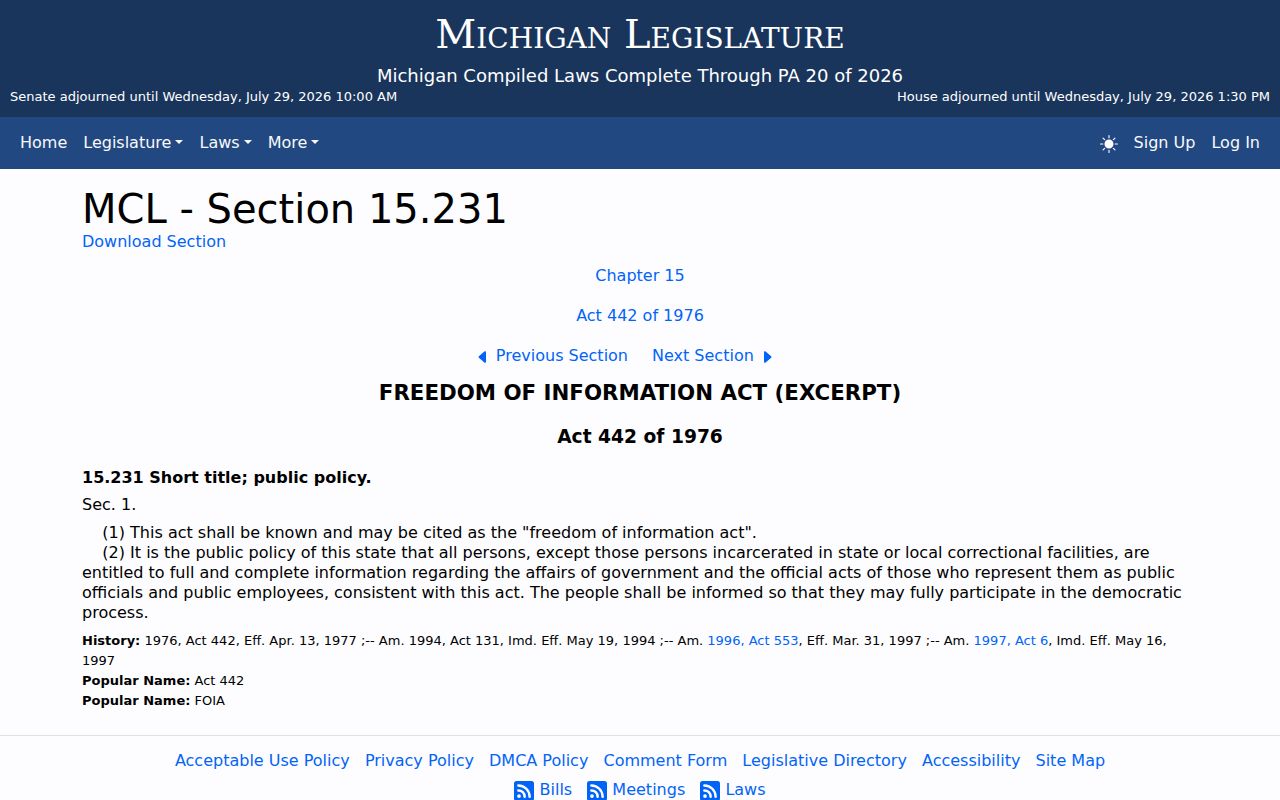
The statute supports access to public-body records while preserving exemptions, fees, response procedures, and lawful redaction.
Key Statutes:
Michigan Freedom of Information Act, MCL 15.231 et seq. governs requests to Grass Lake and executive agencies for records in their custody.
MCL 28.241a and 28.243 set the framework for MSP criminal-history maintenance and public dissemination.
Michigan Court Rule 8.119 controls public court files, copies, retention, redaction, and nonpublic material.
A “no record” result is limited to the system, search terms, and public data checked. It is not a universal clearance across every Grass Lake, county, state, federal, sealed, or out-of-state source.