
Checking Criminal History in Jackson County
A complete Jackson County records check is layered. Start with the court file because it shows charges, hearings, and the outcome at count level. Use the district court for misdemeanors and the first stages of a felony. Move to circuit court after a felony bindover. Then compare the result with ICHAT, the Michigan State Police public repository product. ICHAT reaches across Michigan, but it omits warrants, juvenile and traffic matters, federal cases, out-of-state records, and many minor local offenses.
Gather the legal name, date of birth, likely court, and an approximate event date first. A case number is even better. Spellings and aliases matter because the court and repository match people in different ways. If the goal is to find a report or current booking, go back to the arresting agency or sheriff after checking the case. These steps keep a filing, jail hold, or old repository entry from being mistaken for the final result.
- Select Jackson County in the court docket path and choose district or circuit court.
- Search by party name or case number, then match the court, filing date, and charge.
- Read each count through its final disposition instead of stopping at the first event.
- Compare the court outcome with ICHAT, OTIS, or the creating police agency when relevant.
- Ask the correct clerk for the register of actions, judgment, or certified disposition when proof is needed.
Jackson County Criminal Record Systems
One event can create five separate Jackson County records. The arresting agency writes the incident or arrest report. County corrections creates the booking and release record. The prosecutor and courts build the charging file and register of actions. MSP receives reportable fingerprint and disposition data for ICHAT. MDOC adds a different record if a sentence leads to state prison, felony probation, or parole. PSOR is yet another system for people with qualifying registration duties.
Record flow: Police report › county booking › district or circuit case › MSP repository › MDOC or PSOR when applicable.
The official Jackson County service gateway shows how the courts, sheriff, FOIA office, and departments remain separate even when they concern the same incident.
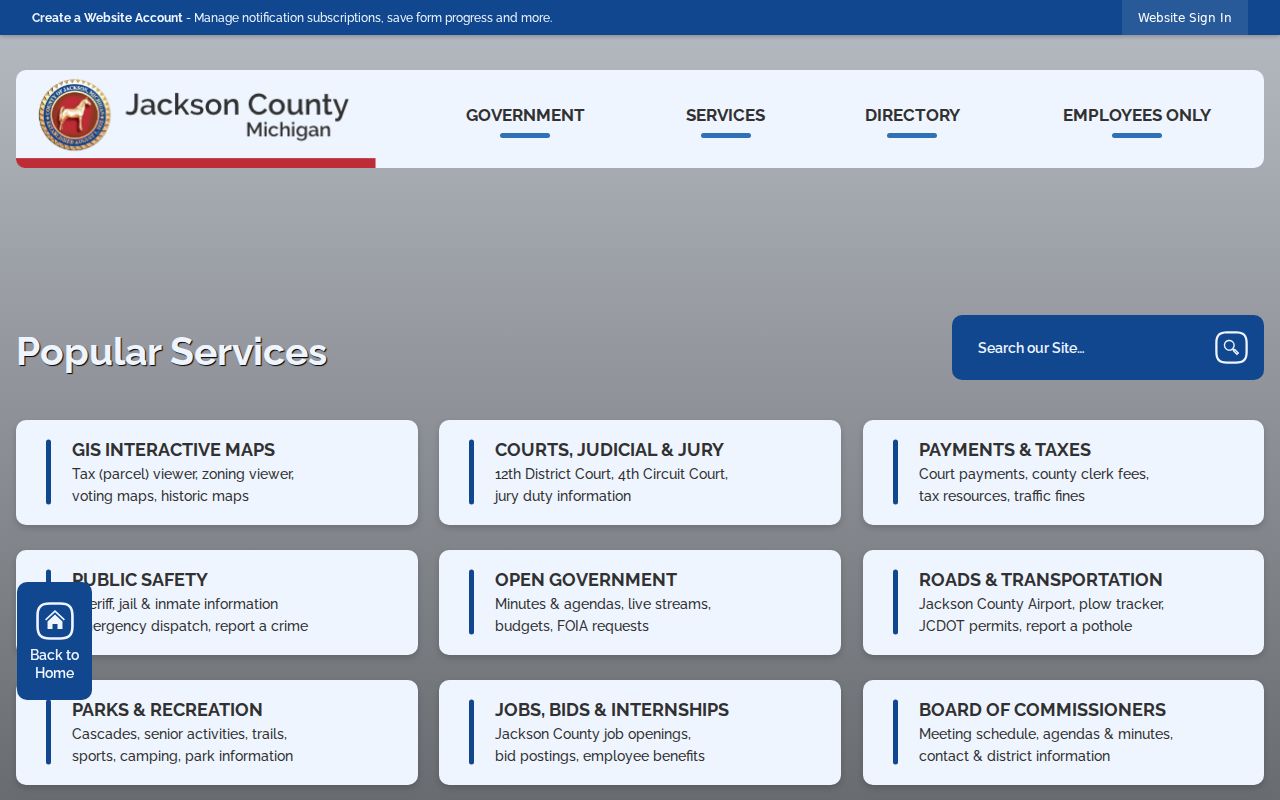
The gateway is a routing tool. It does not merge the records or replace the search held by each custodian.
Michigan Official Background Checks
Michigan State Police, Criminal Justice Information Center, maintains the statewide repository. Its Internet Criminal History Access Tool offers a public name-based result for Michigan felonies and serious misdemeanors punishable by more than 93 days when the required arrest and disposition data has been reported. The ordinary search costs $10. First name, last name, date of birth, sex, and race are used to narrow the match. The result is not a national file and does not replace the Jackson County court docket.
For review or correction of a person's own Michigan record, MSP provides a fingerprint process through law-enforcement Live Scan sites and approved channels. Jackson County Sheriff takes fingerprint appointments Monday through Thursday from 9 a.m. to 4 p.m. at its Records Division. A current Michigan driver license or state ID and the requesting agency's code or form are needed. The research did not confirm one stable, all-purpose local fee, so the office should be asked about the current charge for the specific transaction.
The MSP criminal-history page is the official route into ICHAT and fingerprint record review.
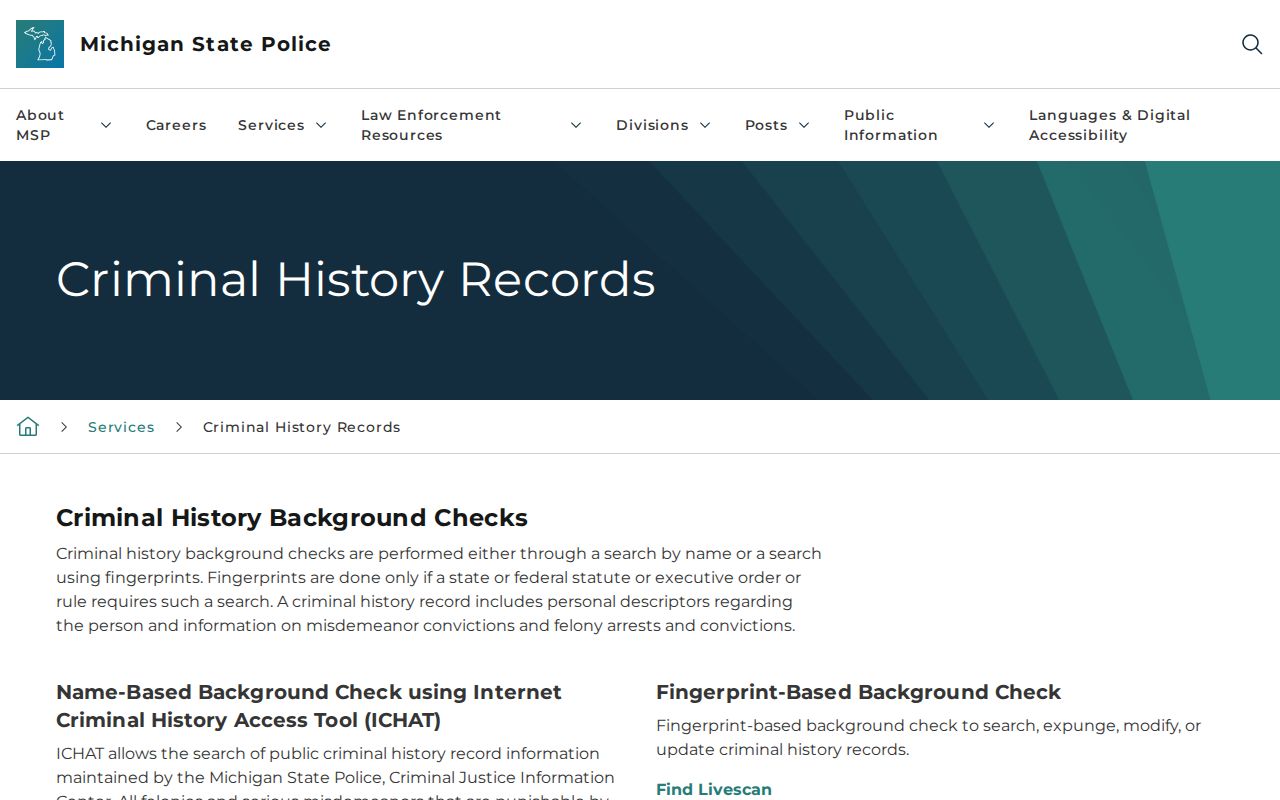
The state page also explains the limits of a public name check, which is why a Jackson County court search remains essential.
Jackson County ICHAT Record Gaps
ICHAT answers a narrow question: what public Michigan repository history matches the identifiers entered? It does not show active warrants. Federal, tribal, other-state, juvenile, traffic, and suppressed material is outside its public result. Local misdemeanors below its reporting scope may also be absent. A no-record response means no matching public repository entry under the submitted data, not that no arrest, report, case, or warrant exists.
A searcher should compare any listed arrest cycle with the court's final disposition. If the court record is wrong, correction begins at the sentencing court. If the certified court result is right but ICHAT is incomplete or inaccurate, MSP's update process calls for identity verification and supporting court documents. That order matters because the repository usually depends on data sent by local justice agencies.
| Channel | Best Use | Main Limit |
|---|---|---|
| Jackson court docket | Charges, events, and dispositions | Not a statewide identity history |
| ICHAT | Public Michigan repository result | No warrants or many excluded categories |
| Sheriff or police | Incident, arrest, and booking source files | Agency-local scope |
| OTIS | State custody and felony supervision | No county-jail-only population |
Criminal Record Types
Jackson County criminal records are defined by their custodian and purpose. A police narrative describes an alleged event and the officer's basis for action. A booking file records intake and custody. The complaint or information states charges. The court file tracks what happened to each count. ICHAT condenses reportable identity-based history, while OTIS and PSOR address separate custody, supervision, or registration duties.
Keeping those roles distinct prevents a common error. A police charge can change when the prosecutor reviews the report. The court may dismiss or amend a count. A jail entry may show a hold that never becomes a conviction. The final court disposition is the key to the legal result, but the creating agency remains the right source for its own report.
- Arrest and booking records: agency allegations, intake identity, custody charge, bond, holds, and release.
- Criminal court files: pleadings, hearings, orders, count-level outcomes, sentence, and financial entries.
- Repository history: public reportable Michigan arrest and disposition cycles matched to identity.
- Warrants: court-issued authority that may be reflected in the register but is excluded from ICHAT.
- Supervision and registry records: MDOC custody, probation, parole, and qualifying PSOR duties.
Jackson County Court Record Routing
Two adult criminal courts share the public campus at 312 S. Jackson Street. The 12th Judicial District Court hears misdemeanors and handles felony arraignment, probable-cause conference, and preliminary examination. A felony bound over for trial moves to the 4th Judicial Circuit Court. That means a single felony can have district events first and a circuit file later. Searching only one court can leave half the path unseen.
Begin with the county Court Docket and select the court. Party name or case number can lead to the public register. Confirm the court, filing date, status, charge, and disposition. Ask the right clerk for a complaint, information, judgment, sentence, or certified disposition that is not available online. Older or offline material may require a clerk search and archive retrieval. Copy and certification costs depend on the request, and the research does not support quoting one fixed per-page price.
- Probable-cause conference
- A Michigan district-court felony stage before the preliminary examination.
- Preliminary examination
- A hearing on whether probable cause supports moving felony charges forward.
- Bindover
- The transfer of felony charges from district court to circuit court.
- Disposition
- The final outcome of a charge or case.
Inside a Jackson County Criminal Record
A repository history begins with identifying information, then arranges arrest cycles, prosecution data, court outcomes, sentence, and later custody or supervision updates. The public version suppresses protected identifiers and excluded records. A court file is organized around events in one case, while a booking record is organized around a stay in custody. Reading the source label before reading the fields makes the record easier to interpret.
| Name & Identifiers | Legal name, aliases, birth data, physical descriptors, and agency identifiers where public. |
|---|---|
| Arrest / Booking Data | Arrest date and agency, intake time, holding charges, bond, holds, and release status. |
| Charges & Statutes | Count descriptions, Michigan law citations, offense level, and the charging document. |
| Disposition | Conviction, acquittal, dismissal, amendment, or another count-level outcome. |
| Sentence | Custody, probation, fines, costs, restitution, and other terms ordered by the court. |
| Custody / Supervision | County release, MDOC prison, felony probation, parole, or discharge information where applicable. |
One result should not be used to fill gaps in another. The court's judgment answers how a filed count ended. The police report preserves the original allegation. The booking entry proves custody processing, not guilt.
Jackson County Sheriff Record Requests
The Sheriff Records Division handles records management, reports, registrations, and fingerprint appointments. Its official direction is clear: a sheriff record must be requested through the county FOIA route. Online, email, and U.S. mail channels are available, while walk-in questions follow the office's weekday hours. A useful request identifies the person or event, date range, desired record type, and preferred electronic delivery without asking for unrelated protected material.
The Sheriff Records Division page publishes its request and appointment channels.
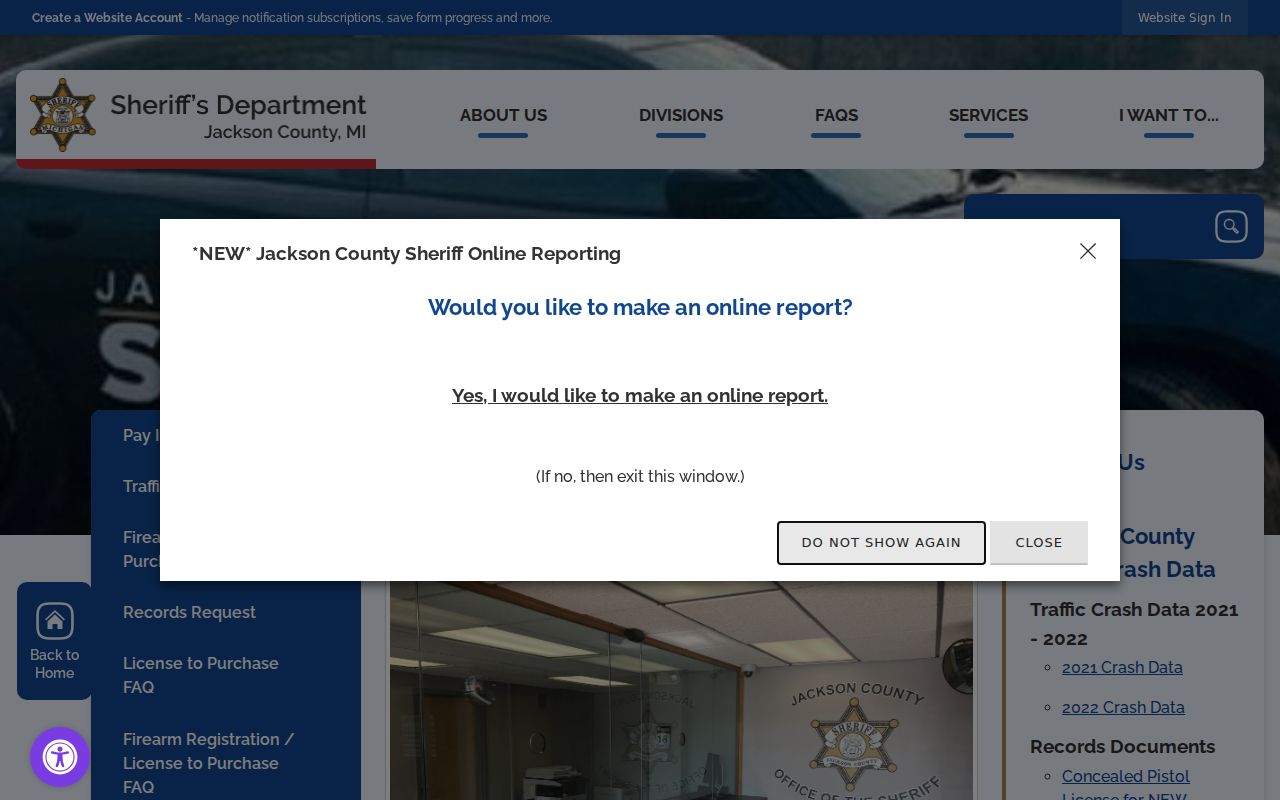
The page is also the current source for fingerprint and sex-offender verification scheduling.
Public Access Laws in Michigan
Public access depends on who holds the record. Michigan FOIA governs requests to executive agencies such as the sheriff and police, subject to exemptions and fees. Court records follow Michigan Court Rule 8.119 and clerk procedures. MSP disseminates public criminal-history information within statutory limits. These channels can redact juvenile, victim, medical, financial, investigative, and other protected information while releasing reasonably separable public portions.
Key Michigan authorities:
MCL 15.231 et seq. states Michigan's policy of access to public-body records, with exemptions and cost rules.
MCL 28.241a and 28.243 govern MSP criminal-history maintenance and public dissemination.
Michigan Court Rule 8.119 governs court-record access, copies, retention, and nonpublic material.
MCL 780.621g establishes automatic set-aside rules and waiting logic.
A FOIA request is not the right tool for every record. Court documents go to the clerk. ICHAT supplies the public repository product. Sheriff or police FOIA channels hold their own reports. OTIS and PSOR each answer a different state-level question.
Jackson County Jail Record Fallbacks
No dependable current official public inmate-name roster was found on the Jackson County website. That absence changes the search plan. For someone newly booked or awaiting a local hearing, contact Jackson County Corrections or the sheriff and use a focused request for booking material. The district court becomes useful after arraignment. ICHAT is a poor recent-arrest tool because it relies on later reporting and excludes warrants.
The records requested can include a booking number, intake date, legal name, arresting agency, holding charges, bond, court case number, release entry, and booking photo if releasable. Medical, classification, victim, and safety details can be withheld. Ask for the booking face sheet, charge and bond list, and release entry separately. That is more precise than asking for every jail record.
The official Jackson County Corrections contact is the stable route for present custody questions.
Note: A holding charge or no-bond notation is a custody status, not a judgment of guilt.
Sealed, Expunged, and Restricted Records
Michigan uses both “set aside” and “expungement.” A set-aside conviction is removed from ordinary public view, but that does not mean every internal law-enforcement record is physically destroyed. Juvenile records, suppressed cases, protected victim data, and certain identifiers are also excluded or redacted. A missing public result must be described only as no matching public entry in that system.
Jackson County's application path begins with a certified conviction record from the sentencing court. The applicant reviews current eligibility, completes the current court and MSP materials, files in the court of conviction, and serves the required agencies. The prosecutor and victim may be heard, and the judge applies statutory factors. Michigan's Clean Slate system is different. Eligible misdemeanors generally use a seven-year wait, while eligible felonies generally use a ten-year wait from sentence or completion of imprisonment, subject to the statute's limits and exclusions.
After an order or automatic process, ICHAT can be checked to see what remains public. A certified order should be sent to an agency whose display is still wrong.
Jackson County Warrant Record Limits
A Jackson County warrant will not appear in ICHAT. The sheriff also states that it will not run a person remotely on request and disclose whether a warrant exists unless the person is present with proper identification. Public options begin with the 12th District Court record and the Warrant Enforcement Division. A felony circuit warrant belongs with the circuit clerk or counsel. Historical or executed warrant documents may be requested from the issuing court or agency, subject to sealed-investigation limits.
A bench warrant can follow failure to appear or another form of noncompliance. An arrest warrant follows a judicial probable-cause finding. Search warrants authorize a search and may remain sealed during an investigation. Docket updates can lag after recall or satisfaction. Anyone resolving a possible warrant should contact the issuing court or an attorney, confirm instructions with the court, and keep proof of recall. Money should never be sent based only on an unsolicited call.
Jackson County Supervision Records
OTIS covers Michigan state prisoners, felony probationers, parolees, and certain recently discharged people. It does not cover a person held only in Jackson County Jail, an unsentenced defendant, exempt information, or most people discharged more than three years ago. Search options include name, MDOC number, age, sex, race, status, and offense. A profile can show sentence offenses, court and county, custody or field-office status, supervision dates, and public descriptors.
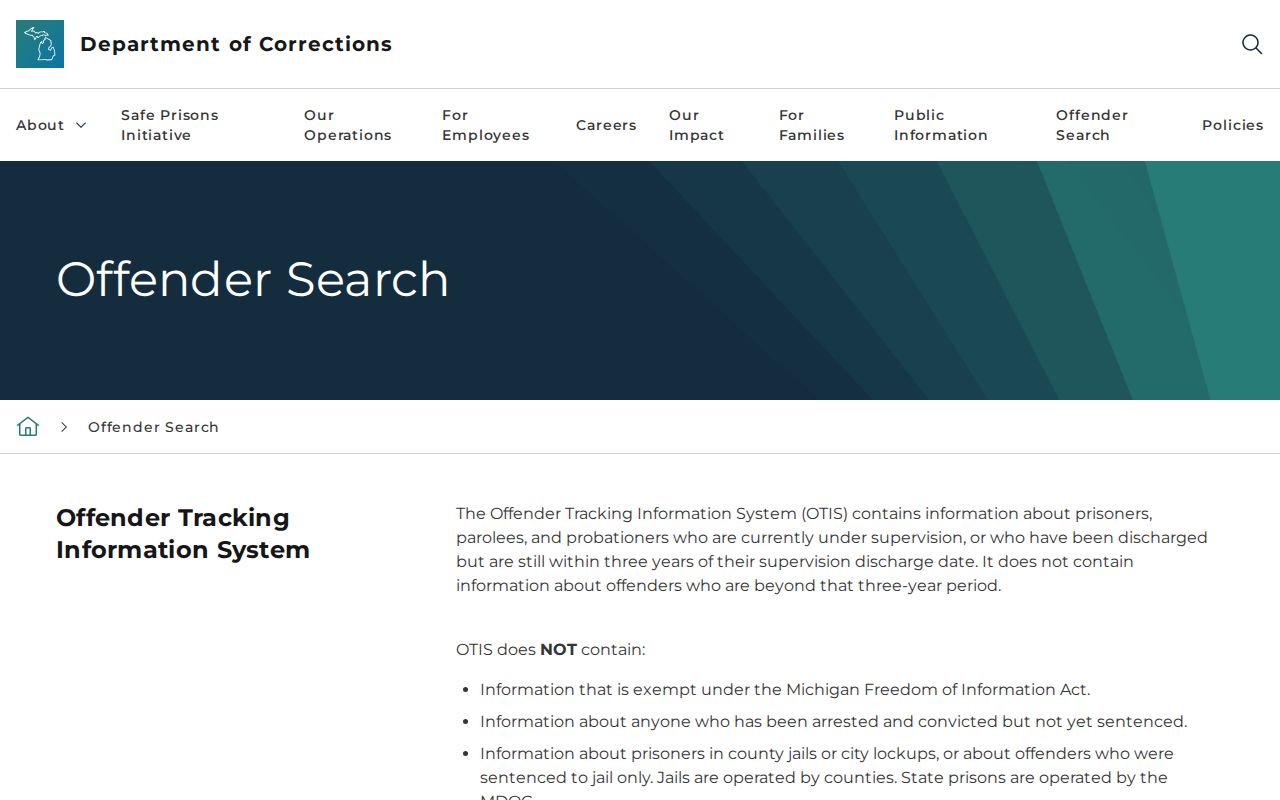
The Michigan Department of Corrections OTIS page explains those boundaries.
The MDOC Region 9 directory separates the Jackson probation and parole counters.
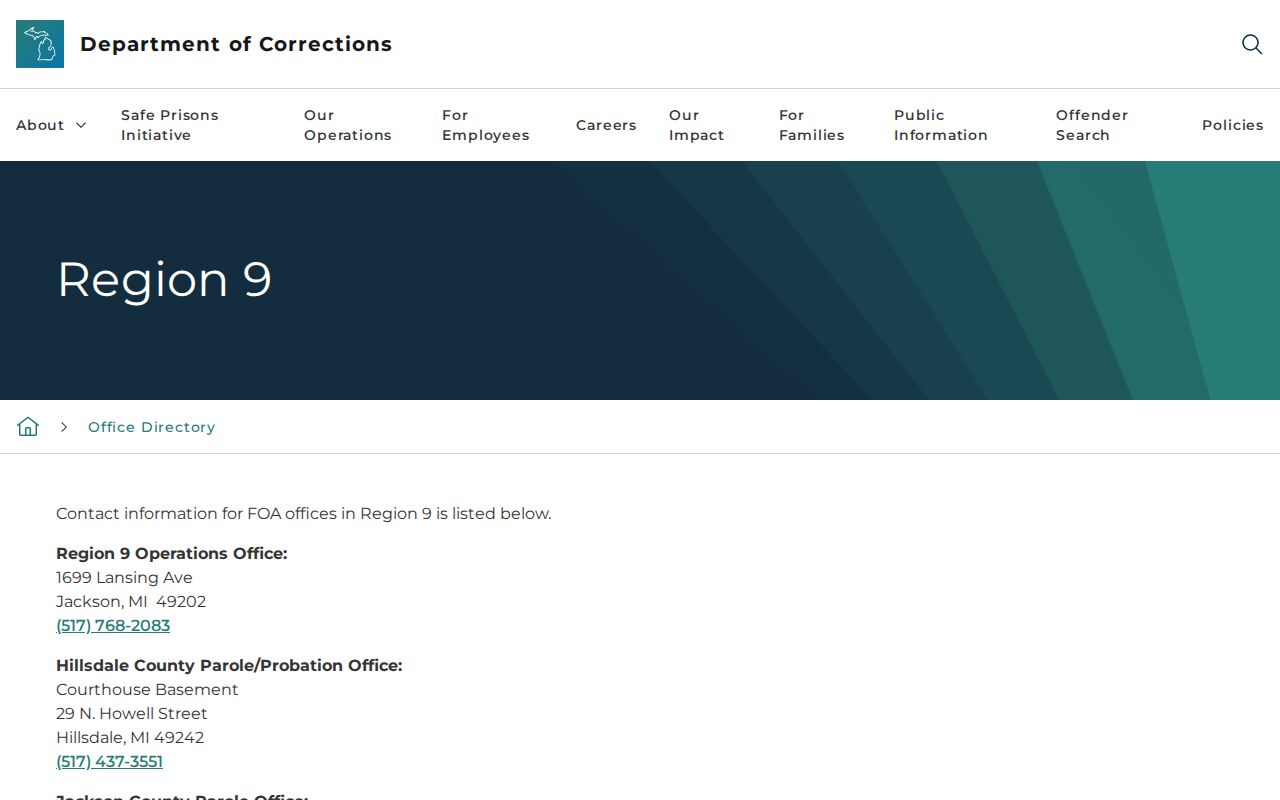
Jackson County's probation office is at the court campus, while the parole office is on Lansing Avenue.
The Michigan Parole Board page explains the state's felony parole authority.
Neither MDOC field office is the custodian of a Jackson County jail booking file.
Jackson County Federal Record Boundaries
Federal criminal cases are not Jackson County court files and do not appear in ICHAT. Jackson County lies in the Eastern District of Michigan. Party and docket searches use PACER, while federal custody uses the Bureau of Prisons locator. A person reviewing their own national fingerprint history uses the FBI Identity History Summary process, not a county counter.
The U.S. District Court for the Eastern District of Michigan confirms the federal court serving Jackson County.
County clerks cannot certify an Eastern District docket or judgment.
The official PACER service provides federal docket and document access.
PACER requires registration and applies the judiciary's current fee rules.
The Federal Bureau of Prisons locator covers federal custody rather than the Jackson jail or MDOC.
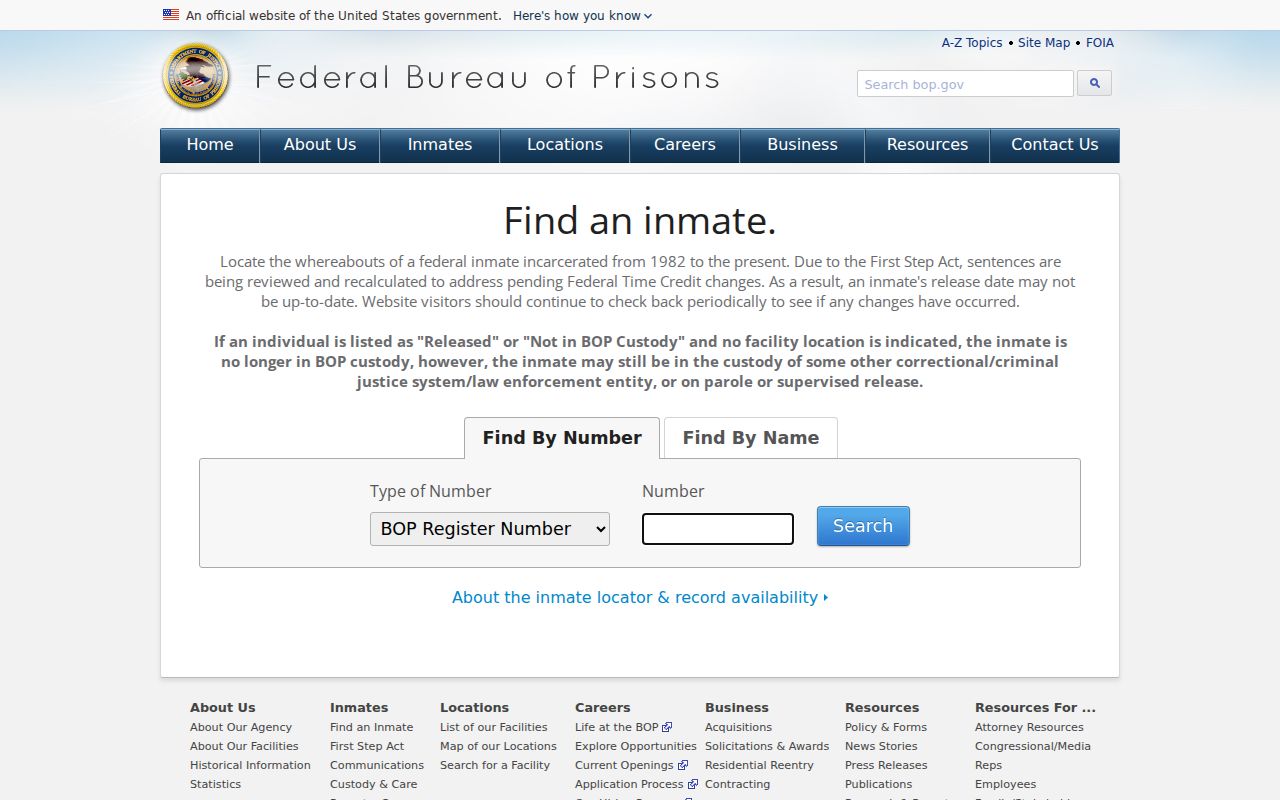
A federal locator result should not be treated as a county booking record.
The FBI explains its subject-only process on the Identity History Summary page. The request itself begins through the FBI electronic department order portal.
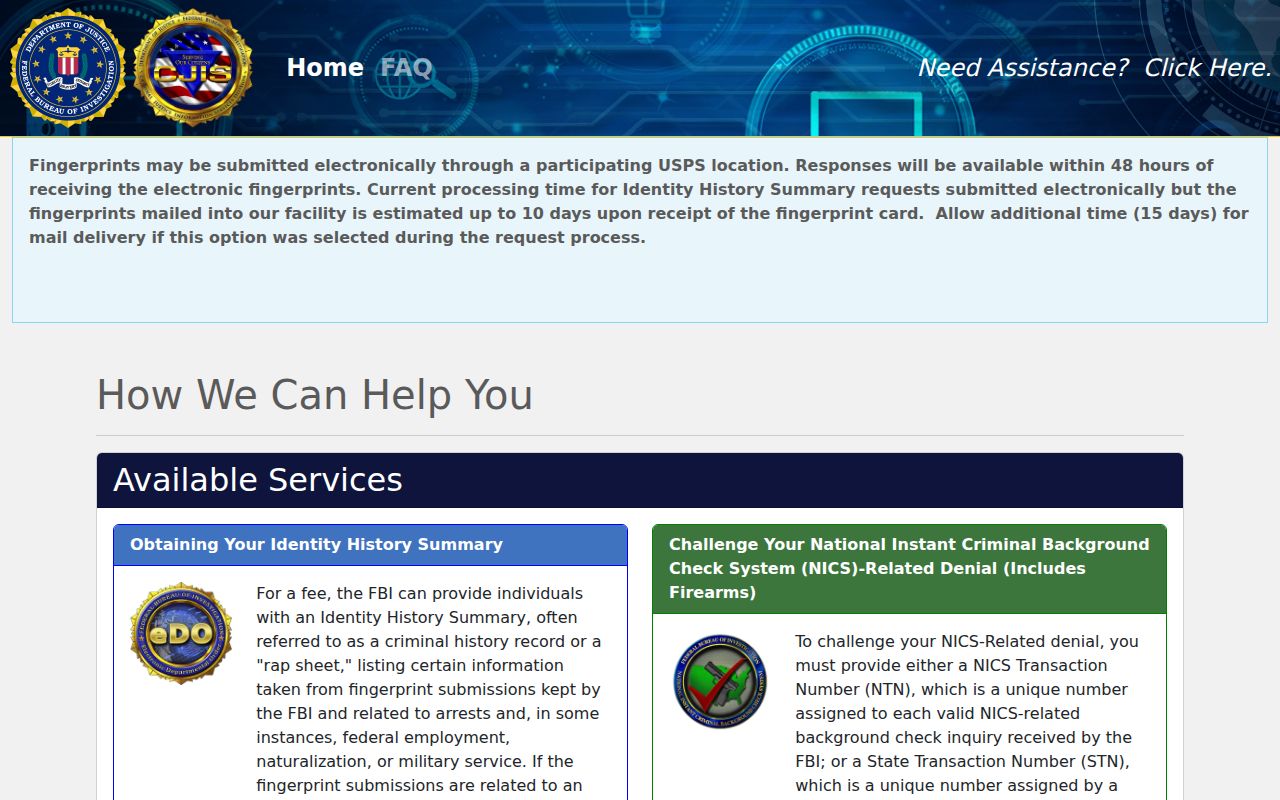
The national fingerprint summary is a personal review channel, not a Jackson County public docket search.
Jackson County Criminal Records by City
The top incorporated places use different local starting points, though criminal cases route into the same county courts. Jackson has a city police records desk and NextRequest portal. Brooklyn and Grass Lake do not have a verified current municipal police portal or municipal criminal court, so the responding sheriff, township, or state police agency holds the law-enforcement report. The cards match the city guides used throughout the site.
Jackson Criminal Records
31,309 residents · JPD records route through its city portal; cases use county courts.
Brooklyn Criminal Records
1,206 residents · village staff can help identify the responding law-enforcement agency.
Grass Lake Criminal Records
1,105 residents · countywide courts and the responding agency hold criminal files.